




June 24, 2026
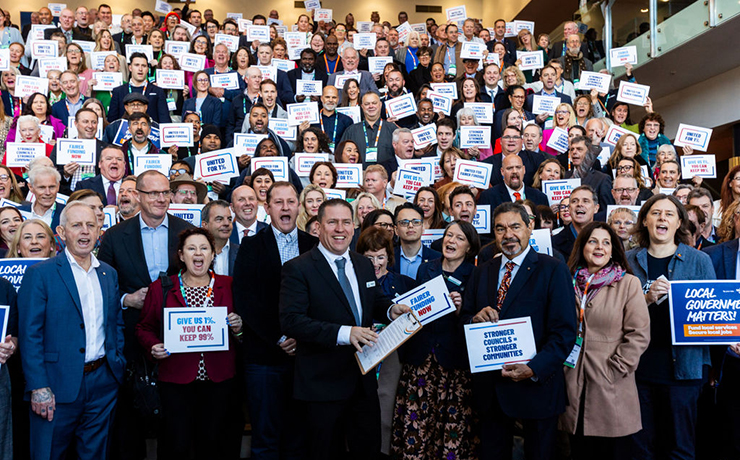
Australia’s 538 local councils have united at the Australian Local Government Association’s National General Assembly in Canberra to call on the Federal Government to deliver an immediate increase in untied funding.
They have warned that without an increase, the financial sustainability of councils – and the services their communities rely on – are increasingly at risk.
Delegates endorsed an emergency motion calling for fairer funding for local government and backed a joint letter to be tabled with every Member of the House of Representatives and the Senate.
The letter, signed by the presidents of State and Territory local government associations, calls for a multi-partisan commitment to a stronger funding partnership with councils.
ALGA president Matt Burnett said the motion reflected the shared reality facing councils across metropolitan, regional, rural and remote Australia.
“Financial sustainability is not an abstract discussion for local government. It is about whether councils can keep doing the job our communities expect us to do,” Mayor Burnett said.
“Councils are responsible for the roads, bridges, libraries, pools, parks, footpaths, stormwater systems, waste services and community facilities Australians rely on every day.
“We are also the first people communities call when something goes wrong, whether that is a local road failure, a disaster, a planning issue or a service disruption.
“Yet councils are increasingly being asked to do more with less funding certainty, less flexibility, limited revenue capacity and less ability to plan for the long term.”
The emergency motion calls on the Federal Government to act now to deliver fairer funding through an immediate increase in untied funding for all councils.
Mayor Burnett said Financial Assistance Grants were central to councils’ ability to respond to local priorities because they were untied and flexible.
“Financial Assistance Grants are not just another grant program. They recognise that no two communities are the same and trust councils to make decisions based on local needs,” he said.
“For rural, regional and remote councils, the pressures include vast geographic areas, small populations, ageing infrastructure and limited rate bases.
“For fast-growing urban councils, the challenge is keeping pace with demand for new roads, drainage, parks, community facilities, waste systems and other services needed to support housing growth.
“The circumstances differ, but the underlying problem is the same. Community expectations, costs and responsibilities are rising, but the funding partnership is not keeping pace.”
He thanked the Australian Services Union (ASU) and United Services Union (USU) for their long support of fairer funding to councils.
ASU National Secretary Emeline Gaske said the halving of value of Financial Assistance Grants as a share of national taxation over the past 30 years – from 1 per cent in 1996 to just 0.49 per cent in 2026-27 – increased the urgency of the call for fairer funding.
“Council workers keep Australian communities running every single day. They collect our bins, running our libraries, maintaining our roads and support communities through floods and fires. They do this work professionally and with commitment, but they need councils that are properly resourced to back them up,” Ms Gaske said.
United Services Union General Secretary Graeme Kelly said the shortfall in funding had forced councils to make difficult budget choices.
“The decline in Federal funding has real consequences for the workers and communities who depend on council services. Restoring the 1 per cent benchmark is the single most important thing Canberra can do for local government,” Mr Kelly said.
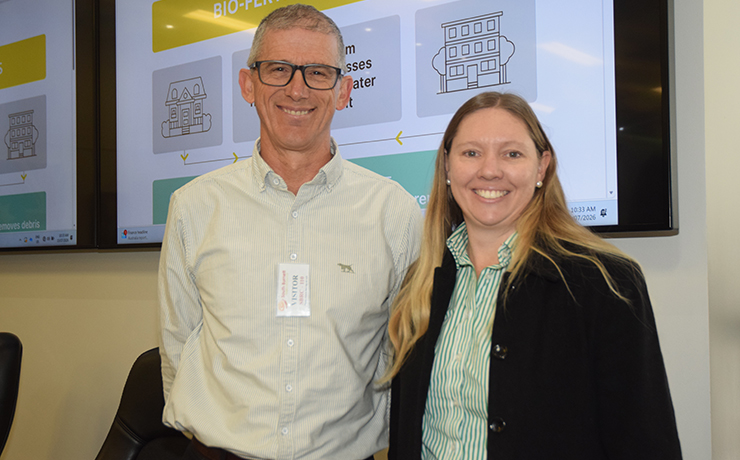
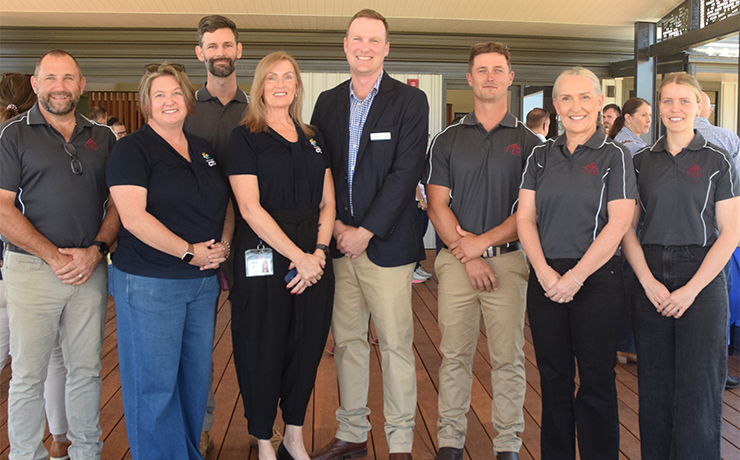
Footnote: Deputy Mayor Linda Little, Cr Deb Dennien and CEO Mark Pitt are representing the South Burnett at the ALGA conference.