




May 15, 2026
Every Federal Budget attracts a range of responses … some negative from political opponents, some neutral and some a bit more positive.
Here’s some of the reactions to this week’s Budget – delivered by Treasurer Jim Chalmers on Tuesday – particularly about items that affect rural and regional Australia:
* * *

The Australian Local Government Association – the peak group which represents local councils – said the Budget was “a vote of confidence in Australia’s 538 councils to deliver on national housing infrastructure priorities” but warned the Federal Government needed to do more to address the growing financial pressures threatening councils.
ALGA president Matt Burnett welcomed the $2 billion over four years to help deliver “enabling” infrastructure (ie. roads, drainage and water) to support new housing and growing communities.
“However, councils have not been given the same support to meet local community needs through secure untied funding and, in fact, support through Financial Assistance Grants has gone backwards as a share of Commonwealth taxation revenue,” he said.
The ALGA said funding for local government through Financial Assistance Grants has declined from 0.51 per cent to 0.49 per cent of Commonwealth taxation revenue in this Budget.
The Budget had also failed to deliver the investment needed to support communities facing increasingly frequent and severe natural disasters, but the ALGA was pleased that Roads to Recovery Program funding was up to $1 billion a year.
* * *
Australia’s livestock and rural transport sector welcomed the Budget’s $10.7 billion fuel reserve and facility but the Australian Livestock and Rural Transporters Association said the government had failed to match that investment with a serious plan to fix rural freight roads.
The Budget includes a $3.2 billion Australian Fuel Security Reserve which, together with increased stockholding obligations, will lift diesel and jet fuel reserves to 50 days, backed by a $7.5 billion Fuel and Fertiliser Security Facility.
It also cut the heavy vehicle road user charge from 32.4 cents per litre to zero for three months from April 1, alongside a broader temporary fuel excise reduction.
ALRTA national president Gerard Johnson said the fuel measures were the most significant direct relief the industry had seen in years, but road funding did not match the scale of the fuel package.
Despite a $8.179 billion in road investment in 2026-27 and $38.7 billion over five years, ALRTA said there was still no clear plan to prioritise livestock routes, ageing bridges and saleyard access roads that constrain rural freight every day.
* * *
The National Rural Health Alliance welcomed the listing of new medicines on the Pharmaceutical Benefits Scheme (PBS).
The NRHA was also pleased to see some further investments to improve the quality of social and affordable housing through the Housing Australia Future Fund for First Nations residents in remote Australia.
“The government has announced continued funding for Strengthening Medicare and has made the Urgent Care Clinics a permanent fixture of our health system. However, there is an absence of targeted investment for primary care, disability, and health workforce for rural and remote Australia,” chief executive Susi Tegen said.
“There is also no reference to how the government will implement the ‘National Health Reform Agreement Schedule F: Better Health Equity for Rural and Remote Communities’, which will take effect on July 1, 2026. Schedule F is a win for rural communities and requires funding for implementation.
“The NRHA welcomes the Budget’s investments in aged care across Australia. However, it is disappointing that there are no targeted aged care programs for rural areas, which are needed to
address the pressing infrastructure and viability issues that rural providers are experiencing.”
* * *
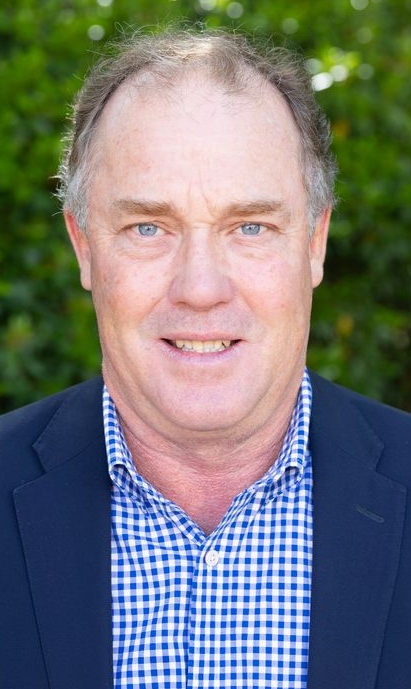
The National Farmers’ Federation welcomed the “hard fought wins” for farmers in the tax reforms, including primary production income being exempt from a minimum tax on discretionary trusts.
However, the NFF raised concerns about cuts to regional infrastructure, connectivity and the Department of Agriculture, Fisheries and Forestry.
President Hamish McIntyre said the NFF welcomed changes ensuring primary production income would be exempt from the new 30 per cent trust tax and confirmation there would be no changes to small business capital gains tax concessions.
“There are around 40,000 trusts used in agriculture so these are significant wins for family farm businesses and reflect the case we have consistently put to the Treasurer about how these changes would impacted succession,” Mr McIntyre said.
The NFF welcomed the government’s $10 billion fuel security package and the permanent extension of the instant asset write-off.
The NFF also acknowledged the new loss carry-back provisions, an $8.7m investment for the APVMA, along with the previously announced decisions to defer export cost recovery increases, and a $387 million boost to CSIRO and the Australian Centre for Disease Preparedness.
However, the NFF raised concerns about cuts to the Department of Agriculture, pests and weeds, the Inland Rail Project and regional connectivity including the Regional Tech Hub.
* * *
AgForce said the Budget ultimately fell short of delivering the targeted, immediate support which Queensland producers needed.
“While it is encouraging to see the government respond to producer concerns about family trust and taxation arrangements, many Queensland farming businesses will still be asking where the direct farm-gate support is,” general president Shane McCarthy said.
AgForce said further details were still needed to understand how proposed exemptions would apply across the diversity of family-run agricultural enterprises and succession planning arrangements.
Measures aimed at strengthening national fuel resilience, including additional fuel storage initiatives, were welcomed, but AgForce said long-term fuel security strategies must directly include agriculture and regional Queensland.
* * *

The South Burnett’s three LNP Federal MPs – Llew O’Brien (Wide Bay), Colin Boyce (Flynn) and David Littleproud (Maranoa) – identified similar concerns.
Mr Boyce and Mr Littleproud both said “broken promises and cuts” had “obliterated a fair go” for their constituents, while Mr O’Brien said “broken promises and higher taxes would leave families, seniors and businesses worse off”.
Mr Boyce and Mr Littleproud identified $11 billion cuts which they said would affect regional Australians:
- $6.15 billion from the Inland Rail project,
- $4.7 billion from infrastructure spending,
- $103 million from the National Water Grid,
- $191.6 million from pest and disease, regional trade and drought funding for farmers, and
- $21.4 million cut regional communications funding.
Mr Boyce and Mr Littleproud also targeted “net zero” spending which they said was fuelling inflation as well as Labor’s “addiction to mass migration”.
Mr O’Brien said the Budget had removed incentives for saving.
“From Labor’s cuts to the private health insurance rebate for seniors to its broken promises on its housing, small business and family savings tax, and $275 cut to energy prices, Prime Minister Anthony Albanese, who promised us that his word is his bond, is about to make life so much harder for families and businesses in Wide Bay,” Mr O’Brien said.
“The government has failed to deliver any new suitable funding programs to help veterans, community and sporting groups to realise their ambitions to cater for growing demand for their facilities and services.”