




A campaign to convince Queenslanders to allow the State’s politicians to sit for an extra year will begin this week.
Queensland currently has variable three-year terms, which means the government of the day is able to set the election date to its advantage.
But both the ruling Labor Party and the LNP Opposition are pushing for fixed four-year terms to bring Queensland into line with every other state except Tasmania, which has four-year non-fixed terms.
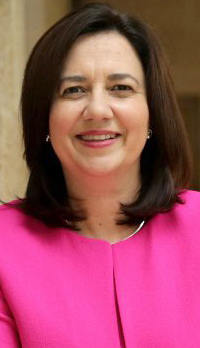
Premier Annastacia Palaszczuk on Friday signed the writ for a referendum on the proposed change, which will be held alongside the March 19 Council elections.
Ms Palaszczuk said the Electoral Commission of Queensland would start an awareness campaign from Saturday and Governor Paul de Jersey would officially issue the writ on Monday.
The referendum is being conducted after the Government and Opposition both supported the move to fixed four-year terms through the passage of the Constitution (Fixed Term Parliament) Amendment Bill 2015 last year.
“Queensland is the only State without four-year terms,” the Premier said.
The State Government has allocated $11.5 million to ECQ to conduct the referendum and, after working with the Local Government Association of Queensland, will provide a $3.7 million subsidy for local government to cover the cost of holding the referendum in conjunction with the council elections.
The saving for Queensland taxpayers – compared to holding a separate referendum – is $5.1 million.
Attorney-General and Minister for Justice Yvette D’Ath said the Government and Opposition would finalise a “yes” case committee.
“We have taken a bipartisan approach to this issue, seeking to work constructively to ensure the best outcome for the future of Queensland’s system of government,” Mrs D’Ath said.
“It’s only right that the people of Queensland have their say.”
Premier Palaszczuk said she believed four-year fixed terms would bring certainty and save taxpayers money by reducing the number of elections by one third.
Katter’s Australian Party will be in charge of the “no” campaign, she said.
The changes, if passed, would come into effect after the next election in early 2018.
They would mean future State elections would be held on the last weekend of October every four years.