




October 10, 2013
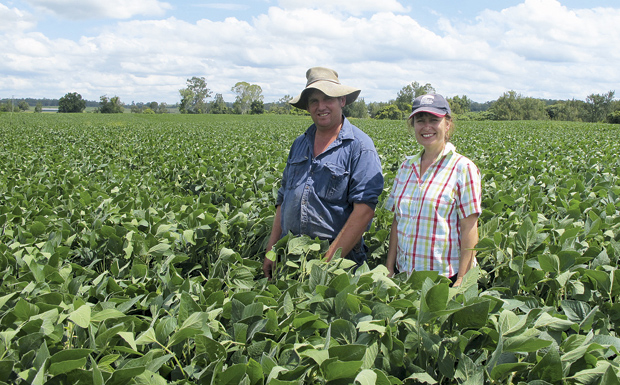
Two new soybean varieties – Richmond and Hayman – are expected to provide growers with improved grain quality, durability and yields.
The two new varieties, which will replace older popular varieties such as A6785, have been developed by the Australian Soybean Breeding Program, which the GRDC invests in with its research partners CSIRO and the NSW DPI.
“Not only will Richmond yield more than A6785 (8 per cent more, on average) it will also provide grain growers in traditional soybean-growing areas in northern NSW and southern Queensland with better quality grain with higher protein,” Dr Andrew James, leader of the breeding program, said.
Soybean crops can contribute in excess of 100kg of residual nitrogen per hectare after the grain is harvested.
Tofu and soy-milk processors seek grain with high protein levels (40 per cent and above dry-matter content) as it enables them to produce more tofu or milk from the same amount of beans.
These new multipurpose varieties allow growers flexibility to supply a greater range of markets, including higher-value export markets such as Japan.
Dr James says Hayman possesses these desired characteristics and will have a wider application.
“We anticipate that Hayman is going to have the greatest impact because it is able to be grown over a wide range of planting dates,” he said.
Hayman also has a high biomass (25 per cent higher than A6785) and grain protein (up to 5 per cent higher) so it is expected to become a silage favourite with dairy farmers.
Dr Natalie Moore, a research agronomist for NSW DPI, worked with Dr James to select and evaluate Hayman and Richmond.
Dr Moore said an added bonus of both varieties would be the improved resistance to powdery mildew as well as pre-harvest weathering, which can result in grain going mouldy if it rains before harvest.
“Compared with current soybean varieties, both Richmond and Hayman will be able to withstand an extra few days of rain at harvest time, which growers along the coast will welcome, as well as inland growers who have been affected by the very wet years recently,” Dr Moore said.
“We were actually lucky, when trialling these crops, that the very wet conditions lent themselves to selecting advanced varieties that were resistant to severe outbreaks of powdery mildew.
“This added resistance, coupled with the weathering durability, will provide more security against unseasonal weather for growers who want to harvest the grain.”