




October 28, 2026
The CSIRO has been investigating a problem for avocado growers which prevents fruit from making it to harvest.
“Early fruit drop” – or immature fruit abscission – is a major challenge faced by growers.
A five-year research project by the CSIRO, supported by Hort Innovation, has found that hormonal changes in the seed coat of the fruit could be to blame for the immature fruit falling from trees.
The findings have been published in the Journal of Experimental Botany
The next step will be to develop responses to the problem.
CSIRO project lead Dr Harley Smith said the first stage of the project focussed on understanding the developmental and physiological factors that made a tree shed a majority of fruitlets.
“Our research indicated that hormonal reprogramming in the seed coat (the maternal organ that envelops the seed) was the deciding factor that initiated immature fruit abscission, in response to reduced carbohydrate availability,” Dr Smith said.
Dr Smith said research to reduce fruitlet drop would support an industry that produces more than 130 thousand tonnes of avocados annually and is worth about $800 million to the Australian economy.
“During the summer months, it is really frustrating for growers to be walking through an orchard, listening to the thumping of immature fruit hitting the ground and not having any way to manage that loss in yield,” said Dr Smith.
“Further, the fact that immature fruit abscission is influenced by the environment, means this process is an underlying factor that contributes to fluctuations in annual yield, which impacts market development.”
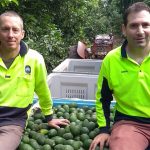
Avocados Australia CEO John Tyas said growers welcomed the findings around the cause of early fruit drop and were looking forward to the outcomes of the new research into management of the issue.
“This research is very important for the Australian avocado industry, especially in Queensland and Western Australia where immature fruit abscission is a major factor that reduces yield,” Mr Tyas said.
Mr Tyas said avocado growers had reported as much as 80 per cent fruit drop in their annual crops so any actions that could increase and stabilise yield would be welcome.