





October 13, 2016
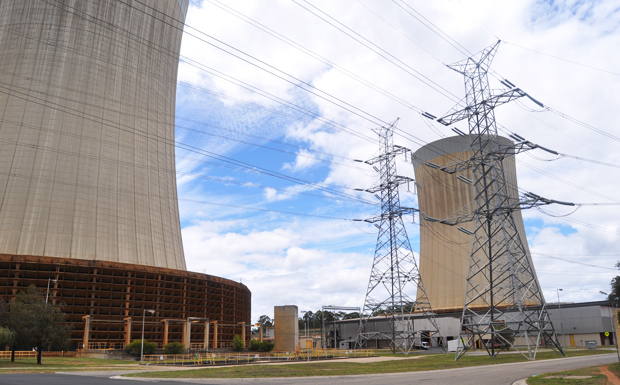
Member for Nanango Deb Frecklington challenged the Premier in Parliament on Thursday about redundancies at Tarong Power Station.
Mrs Frecklington said Stanwell had begun cutting positions at Tarong and in Rockhampton.
southburnett.com.au confirmed on Wednesday night that staff members at Tarong had been told their jobs could be made redundant.
Mrs Frecklington said this deserved an explanation from the government, given it had promised that no jobs would be lost in government businesses.
“When I asked the Premier about these redundancies, she refused to answer why her government is putting people out of work,” Mrs Frecklington said.
“The Premier knows that her government’s reckless rush to 50 per cent renewable energy will cost Queensland jobs and boost Queensland power bills, but she won’t come clean with the people of Queensland.”
Mrs Frecklington said the release on Wednesday of Labor’s “Credible Pathways to a 50 per cent Renewable Energy Target for Queensland – Draft Report” was very worrying for the people of South Burnett as it includes an option to close one of Queensland’s coal-fired power stations.
“With the release of this report, it is even more concerning the whole Tarong Power Station may close and I believe our community deserves to know if this is the case, and how the transition is going to be made.
“Our region is particularly sensitive to this flawed policy, with so many people in the South Burnett reliant on the jobs and benefits which flow from the Tarong Power Station and Meandu Mine.
“The Queensland Productivity Commission say the real cost of this excessive 50 per cent renewable target will be nearly $11 billion in costs to Queenslanders who will have to subsidise this plan.”
* * *
Cleaner Power Than Victoria
The Draft report released on Wednesday details three proposed pathways to achieve the State Government’s 50 per cent renewable energy target by 2030.
It aims to achieve the target while maintaining electricity security and reliability, and be “cost-neutral” to electricity users.
The three alternative pathways are:
- Linear pathway: Assume a uniform rate of renewables coming on line from 2020-2030.
- Ramp pathway: Features a ramp up later in the period to capitalise on falling technology costs
- Stronger National Action pathway: Assesses what additional State Government action would be required to reach a 50 per cent target if a stronger national emissions reduction scheme was put in place from 2020 to achieve a 45 per cent reduction in electricity sector emissions on 2005 levels by 2030.
Discussing “coal retirements” (ie. power station closures), the draft report links this to any national carbon pricing mechanism (where market forces could determine closures) or “planned retirement”.
The report suggests that the State Government, as owner of more than 60 per cent of the State’s coal-fired generation capacity, was in a unique position to determine closures, but also says that independent action by the government to do so, would not be best for national emissions.
“Analysis by the Panel shows that Queensland has the newest and least emissions-intensive fleet of coal-fired generators in the National Electicity Market (NEM),” the report notes.
Tarong North is the second cleanest and Tarong is the fifth cleanest power station in Queensland, and both are cleaner than NSW and Victorian plants.
“As a result, any independent action from the Queensland Government may result in a sub-optimal outcome for reducing national emissions,” the report states.
“That is because it would offer an advantage to coal generators in other States that have higher emissions intensities.
“For this reason, the Panel is of the view that any planned closure would best be coordinated through national processes.”