




October 2, 2013
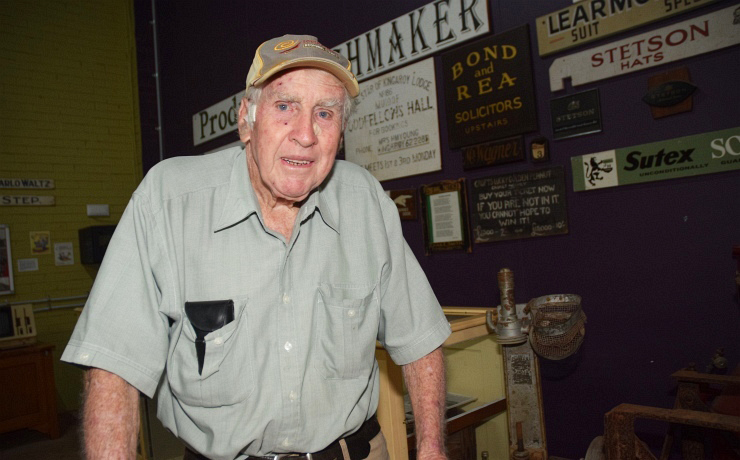
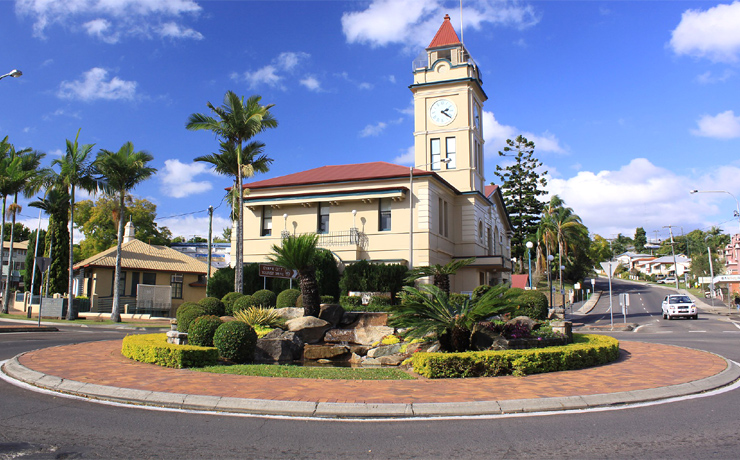
Thirty-five years ago a junior water and sewerage engineer joined Kingaroy Shire Council, fresh from graduating from the Darling Downs Institute of Advanced Education.
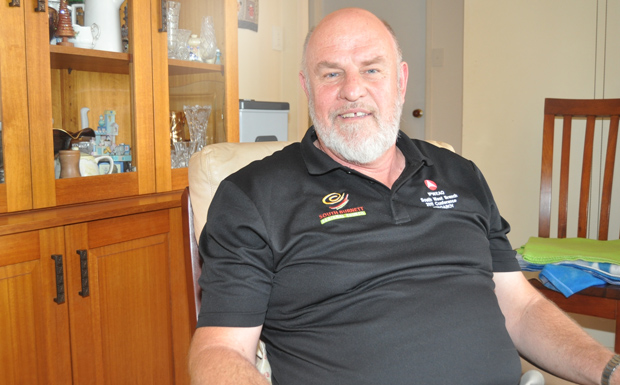
John Kersnovski joined council on July 4, 1978. The young engineer could not have predicted the changes he would see over the years … the growth, the challenges of council amalgamation and his promotion through the ranks to Shire CEO.
John finished up with the South Burnett Regional Council last month after a career that spanned 35 years and included the incredible growth spurt in Kingaroy which was linked to the Tarong Power Station and Meandu Mine.
“Fisher Street was the extent of Kingaroy … the population was about 5000 and you could buy a block of land in River Road for between $3000 and $5000,” he recalled.
“Now the town has a population of about 10,000.”
The engineering department at Council was kept busy keeping up with all the road and stormwater drainage work that the expanding town demanded.
And there were other challenges.
Kingaroy residents stunned by the 2011 and 2013 floods would have been horrified by the back-to-back floods in 1982 and 1983 which cut the town in two.
“Water came right up to the window ledges of a house in River Road,” John said.
“Other houses had water through them. A car was washed away in Baron Street.”
The Town Common area was completely flooded with water spilling across Youngman Street; the sheds along Pound Street were inundated.
In Kingaroy Street, water was in the Club Hotel and other buildings on the corner of Alford Street.
“You couldn’t get from one side of town to the other,” John said.
The solution was engineering … and lots of it.
Eric Rasmussen was Shire Engineer and John was Works Engineer.
Large underground stormwater pipes were laid up Kingaroy Street and Youngman Street, and a large concrete culvert was put through the Town Common.
“We spent more than $1 million, which was quite a struggle for Council in those days,” John said.
“It was financed over several years, but it was the best thing we ever did. The water used to flow right across Youngman Street, now it just drains straight away.
“Kingaroy used to be known as ‘The Bog’. The floorboards of shops in Kingaroy Street between Haly Street and Alford Street were rotting because of the water.
“We installed a massive drainage system to clear away the water, and then changed the grade of the street. And it was all done in a very short time!”
In April 1985, John was appointed Shire Engineer (a title that was later changed to “Director of Engineering Services”). Current Deputy Prime Minister Warren Truss was Shire Chairman (the position now known as “mayor”) and Ron Knopke was Shire Clerk (CEO).
Other projects at the time included the raising of the Gordonbrook Dam wall by 2.4m – which trebled the capacity – and the construction of the new runway at Kingaroy Airport in 1988, a project forever linked in the minds of the public to then-Queensland Premier Sir Joh Bjelke-Petersen.
This is a notion that John refutes.
“In reality, the government had done a regional airport study. Kingaroy was one of three airports to be upgraded,” John said.
“Joh never even landed there. The first government jet to land at Kingaroy came in with the Labor Government.”
At the beginning of 2006, John was promoted to CEO, a position he was holding when the forced amalgamations of local councils in 2008 suddenly rocked the South Burnett.
Were the amalgamations right?
“I don’t think so,” John said. “But you have to acknowledge that Murgon (Shire) had financial issues, Wondai (Shire) was close to having financial issues, but Kingaroy was not. We were working on our rates and were getting better every year.
“The announcement shocked everyone. The South Burnett Local Government Association had been working quite hard on regional co-operation. Our two northern neighbours were in dire straits but the way the government did it was not the appropriate way.”
John believes it was actually State Government finances that were behind the push to amalgamate.
“Councils that were below the payroll tax threshold were suddenly above it. The State Government coffers benefited quite nicely,” he said.
The cost of amalgamation to the South Burnett was about $8 million, John estimates, “and I suspect it may have been even more than that”.
“And they (the State Government) gave us about $1 million. The poor old ratepayer had to cough up the rest. The poor old ratepayer cops it all the time.”
With the integration of four council staffs, John was initially appointed to the role of Interim Director of Sustainability, and then Director of Governance and Future Directions.
In 2010, then CEO Tony Hayward felt that the South Burnett Regional Council couldn’t sustain five directors, and John was appointed General Manager – Infrastructure, a position he held until a couple of months before his departure from Council.
John’s involvement with the Kingaroy community has extended much further than drains and roadworks.
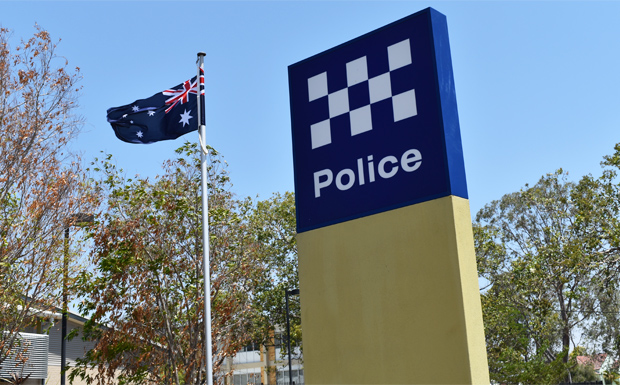
Until September 2, he was Company Secretary of the Kingaroy Private Hospital and has only just resigned from the Kingaroy Police Consultative Committee; he has been Chairman of the Kingaroy Uniting Church and parish secretary for a number of years; is currently on the Board of disability employment group JobLinks and is secretary of the Kingaroy Regional Enterprise Centre Association.
He met his wife Lyn in Kingaroy and they were married in 1984 and have four children: Oliver, who is in the RAAF; Tyler, who is studying aerospace avionics at QUT; Shenae who is in Year 11 at Kingaroy State High School; and Mattea, who is Year 5 at St John’s Lutheran School.
John has spent all his adult life in Kingaroy and he still loves it.
“Even though the community is doing it a little bit tough at the moment, I am passionate about the South Burnett. It’s a great place to live and there’s such a diversity of people and things. We have to build on that,” he said.
“I’ve had a great time with Council, I have enjoyed it. It’s been great to be part of the growth and building of communities.
“Having seen Kingaroy grow, I can say it’s a great community; but really all the communities of the South Burnett are great.
“It’s unfortunate that the only time you see how great they are all acting together is when there’s a disaster.”