





July 1, 2013
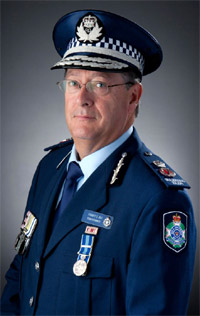
The new structure for the Queensland Police Service officially begins today, marking the beginning of a new era for the organisation according to Commissioner Ian Stewart.
“While the restructure involves significant changes to boundaries and layers of management, they are aimed at delivering a more efficient and improved policing service to the community,” Commissioner Stewart said.
“The new structure will help the QPS become more mobile, flexible and responsive with resources being moved quickly to problem places or cases.
“The community should notice a difference over the next 12 months as more police move to the frontline.”
The implementation will make little difference to South Burnett police except for a change in reporting pathways.
Local stations had been reporting to the Gympie District Office, which is part of the North Coast Region.
Stations located within the South Burnett Regional Council area – plus Cherbourg and Yarraman – will now be shifting into the Darling Downs District, part of the Southern Region.
Officers-In-Charge will report to a Patrol Inspector based at Dalby. The chain of command will then continue to a District Officer in Roma and an Assistant Commissioner in Toowoomba.
Other parts of the former Gympie Police District, including Goomeri and Kilkivan, have been shifted into the Wide Bay Burnett District, part of the Central Region. OICs at these stations will be reporting to a Patrol Inspector at Gympie.
Superintendent Chris Sang, who has been heading up the Gympie Police District for the past two years, has accepted a redundancy package under the restructuring program.
Commissioner Stewart today acknowledged the police officers and staff members who have left the QPS during the restructuring process.
“I thank them for their work and contribution to the people of Queensland. It is unfortunate that some very good people have left the organisation but this was necessary to put more police on the frontline,” he said.
“I also thank the Senior Executive, the unions, the QPS renewal team and all members of the Service for embracing the changes and progressing the organisation to this stage.
“This new structure will put more police officers on the frontline and allow decisions to be made more quickly at the coal face.”
Commissioner Stewart said commissioned officers who accepted redundancies would be replaced by officers of a lower rank.
“As a result, an additional 50 sworn positions will be moved to the frontline sooner than planned complementing the government commitment to moving 200 police officers from the back office to the front line,” he said.
“The new structure maintains the existing strengths of the QPS, including regionalised service delivery which builds strong links between officers and the communities they serve.
“It will maintain and enhance the strong links between local government and police particularly in terms of disaster management,” Commissioner Stewart said.
Summary of key changes:
- A re-alignment of police regions from eight to five
- A re-alignment of police districts from 31 to 15
- 332 staff member positions were made redundant
- 86 voluntary redundancies for commissioned officers
- Five new commands and divisions including the Intelligence, Counter-Terrorism and Major Events Command, Road Policing Command and Community Contact Command
- Removal of a layer of management (Chief Superintendent, Operations Coordinators)
- An additional Deputy Commissioner’s position
- An additional 12 Child Protection Offender Registry officers to supplement the eight existing positions across Queensland
- Delegation changes to enable effective decision-making, action and accountability.
Related articles