




September 6, 2012
A practical handbook especially designed to help Aboriginal health workers dealing with clients with drug and alcohol issues will be launched on September 10.
The team behind the book was given the task: it has to fit in the glovebox and you shouldn’t need a medical degree to make sense of it.
As well, it had to be practical, useful in communities across Australia and up-to-date with the latest drugs and treatments.
“The Handbook for Aboriginal Alcohol and Drug Work” has been written specifically for Aboriginal and Torres Strait Islander health professionals.
“Workers in the field told us that they needed an easy-to-use handbook to help them meet the challenges they face every day,” senior editor Prof Kate Conigrave said.
“Clinicians in the alcohol and drug field are helping people with a mix of social, physical and mental health issues, as well as with alcohol or drugs.
“So the same person who may suffer from alcohol withdrawal seizures may also need treatment for viral hepatitis, treatment for mental health problems because of past traumas, and may urgently need secure and safe housing.
“The clinician is trying to make all of this happen as well as supporting the person to stay away from alcohol. And all the time treatments for alcohol and drug problems are improving and changing, so clinicians need to stay up-to-date.”
The book was created in partnership between the University of Sydney and Aboriginal and non-Aboriginal agencies and health professionals.
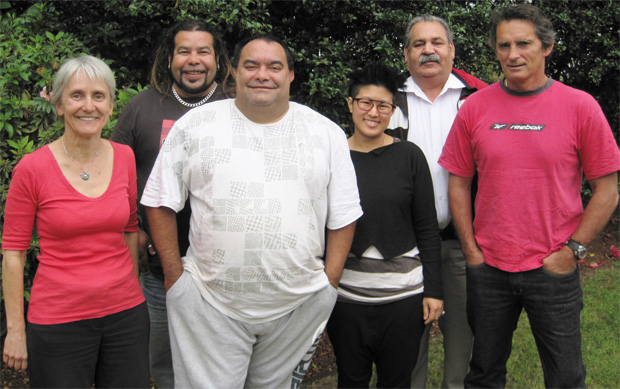
Four of the six editors are Aboriginal. All editors bring together decades of combined experience in working in urban and remote areas.
“In 1996 when I began working in the field I had a lot of questions and not a lot of places to go for answers.,” said Steve Ella, an editor of the Handbook and co-ordinator of the Aboriginal Drug and Alcohol Traineeship program for the NSW Ministry of Health.
“I’d try ringing doctors but often they were in clinics and couldn’t take the call.
“There is a long overdue need for a handbook like this.
“Sometimes a worker in the country may have to drive a person many hours to the nearest detox facility. They need this handbook to carry with them out on the road or in the community to provide them with up-to- date information on what to do. ”
Prof Conigrave said Sydney University became aware of the need for the book when talking with mature age Aboriginal and Torres Strait Islander students, many of whom had already worked in the alcohol and drug field for years.
The result is a book which benefits from the contributions of clinicians, policy advisers and academics from across Australia, including more than a dozen authors from the University of Sydney who have expertise in a range of areas, from Foetal Alcohol Spectrum Disorder to viral hepatitis infection and HIV.
Every chapter was read and edited by an Aboriginal editor or reviewer, to be sure that it was relevant and accessible. The book also includes information on how to find reliable sources of the latest information and tips for clinical support for workers.
The handbook was first distributed to alcohol and drug professionals from around Australia at the National Indigenous Drug and Alcohol Conference in Western Australia in June this year and is also available as a free download.
It has also been recommended as a text for trainees in the field in South Australia, Western Australia and Queensland.
The project started in 2010 with a grant from the Foundation for Alcohol Research and Education (FARE) and continued with the support of the NSW Ministry of Health.